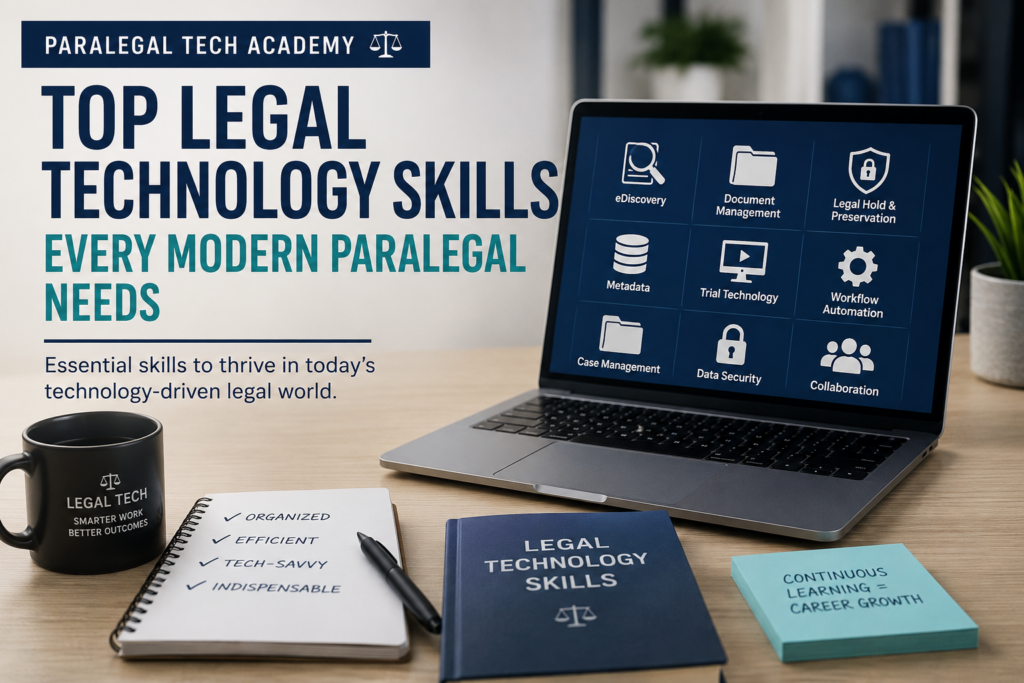
The role of the paralegal has evolved dramatically over the past decade. Today’s legal professionals are expected to do far more than manage documents and calendars—they are increasingly expected to understand the technology that drives modern litigation and legal operations.
As courts, clients, and law firms continue to rely on digital workflows, paralegals with legal technology skills are becoming some of the most valuable members of litigation teams.
The good news? You do not need to be an IT professional to succeed in legal technology. You simply need to understand the tools, workflows, and processes that support modern legal practice.
This post breaks down the top legal technology skills every modern paralegal should develop and explains why they matter in real-world litigation.
Why Legal Technology Skills Matter
Legal cases now involve:
Technology is no longer a separate department—it is woven into nearly every stage of litigation.
- Emails and text messages
- Cloud storage and collaboration platforms
- Digital exhibits and trial presentations
- Massive volumes of electronically stored information (ESI)
Paralegals who understand legal technology can:
- Work more efficiently
- Reduce costly errors
- Support attorneys more effectively
- Improve organization and workflow
- Increase career opportunities and earning potential
In many firms, legal technology skills are now considered a major competitive advantage.
Understanding the eDiscovery Lifecycle
One of the most important skills for litigation paralegals is understanding the eDiscovery lifecycle.
This includes:
- Identification
- Preservation
- Collection
- Processing
- Review
- Production
- Presentation
Paralegals who understand how these stages connect are better equipped to:
- Anticipate workflow needs
- Coordinate with vendors
- Manage discovery efficiently
- Avoid costly mistakes
👉 Related Post: The eDiscovery Lifecycle Explained in Plain English
Document Management & Organization
Modern litigation generates enormous amounts of information. Strong document management skills are essential.
Paralegals should know how to:
- Maintain organized folder structures
- Track document versions
- Manage naming conventions
- Maintain searchable records
- Organize exhibits and productions
Good organization improves efficiency and reduces confusion across litigation teams.
Familiarity With eDiscovery Platforms
Paralegals do not need to master every platform, but familiarity with common systems is extremely valuable.
Examples include:
- Relativity
- DISCO
- Everlaw
- Logikcull
- Nuix
Understanding basic workflows within these systems helps paralegals participate more effectively in document review and discovery management.
Legal Hold & Preservation Knowledge
Preservation failures can create serious legal consequences.
Paralegals should understand:
- What a legal hold is
- When preservation obligations begin
- How custodians are tracked
- Why documentation matters
This knowledge helps ensure discovery remains defensible and compliant.
Attention to Metadata & Data Integrity
Metadata is often overlooked by beginners, but it plays a major role in eDiscovery.
Examples include:
- File creation dates
- Authors
- Email routing information
- Modification history
Paralegals should understand that altering or mishandling files can unintentionally affect metadata and create discovery issues.
Trial Technology Skills
Technology is increasingly used in hearings, arbitrations, and trials.
Paralegals may assist with:
- Digital exhibit presentation
- Trial presentation software
- Deposition video clips
- Exhibit databases
- Courtroom technology setup
Comfort with trial technology can make paralegals indispensable during high-pressure proceedings.
Workflow Automation & Efficiency
Modern legal teams rely heavily on efficiency.
Paralegals who understand workflow automation can help:
- Reduce repetitive tasks
- Improve consistency
- Save attorney time
- Streamline case management
Even small improvements in organization and workflow can significantly impact litigation costs and productivity.
Communication & Collaboration Skills
Legal technology is not just about software—it is also about coordination.
Paralegals regularly communicate with:
- Attorneys
- Clients
- Vendors
- IT departments
- Court personnel
Strong communication helps ensure technology workflows run smoothly and deadlines are met.
Adaptability & Continuous Learning
Legal technology changes constantly. The most successful paralegals are those willing to continue learning.
This does not mean mastering every new tool overnight. Instead:
- Stay informed about trends
- Learn one platform at a time
- Build confidence gradually
- Remain open to new workflows
Adaptability is one of the most valuable long-term career skills.
How to Start Building Legal Tech Skills
If you are new to legal technology:
- Start with foundational concepts
- Learn the eDiscovery lifecycle
- Explore one platform at a time
- Volunteer for litigation support tasks
- Read legal tech blogs and resources regularly
Progress happens through consistent exposure and hands-on experience.
Final Thoughts
Technology is now a fundamental part of modern legal practice, and paralegals who develop legal tech skills position themselves for long-term success.
You do not need to become a software engineer or IT specialist to thrive in this field. What matters most is understanding how technology supports litigation workflows and learning how to use those tools effectively.
Paralegals who embrace legal technology are not just keeping up with the profession—they are helping shape its future.
Stay Ahead in Legal Technology
Legal technology and eDiscovery are constantly evolving. Subscribe to Paralegal Tech Academy to receive practical guides, litigation support tips, and legal tech insights—written specifically for paralegals.
👉 Subscribe to get new posts delivered to your inbox
👉 Subscribe to get monthly freebies delivered to your inbox
👉 Next Post:
Common eDiscovery Mistakes Paralegals Should Avoid